
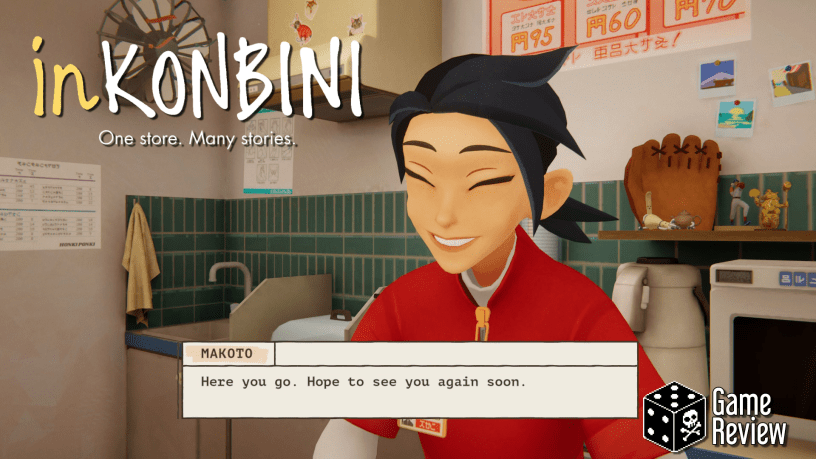
There’s something calming about the mundane. Taking guidance and celebration in the often-portrayed. Slowly getting better at something, taking it at a pace you dictate, mastering the “every day” for others that may only see it once in a while. You probably have never had the opportunity to be in a hole-in-the-wall stop-n-shop that inKONBINI presents, but taking a virtual week to spend running the night shift and learning the business and the people who depend on it leaves much more of a positive outcome than its small shortcomings.
Konbini’s have a rich history and if you ever get to visit Japan, you’ll recognize just how convenient these stores can be. Across Japan there are over 50,000 stores and nearly 7,500 in Tokyo alone. You’ll be inundated across a three-way street war between Lawson, 7/11, and FamilyMart of which will be your loving savior of cheap, delicious goodies. These stores are pure, unadulterated comfort, especially when you could grab a couple Famichiki’s, a couple bottles of water, and a tea for like, 700 yen, which is around $5 USD. Places in the Southeast like your RaceTracs and QuikTrips might get you the same amount of substance but for like quadruple the price.
But Konbinis can be countryside staples, cornerstones of simple necessities: something that the Honki Ponki Konbini has put together for decades under the management of your Aunt Hina. You play as Makoto, a budding college student back home for the summer and donning the uniform for a week while your aunt takes a much needed vacation. You’re holding down the night shift, which consists of re-stocking shelves, fixing and tidying up aisles, and handling tasks left from you by quite possibly the laziest 2nd shift known to man. I mean seriously, these aisles are scuffed on a nightly basis. You’ll also need to keep track of items on shelves that are low or specific items that customers may be looking for as you’ll be able to order deliveries for additional or new items.
Once the shop is ready for open, you’ll be introduced to customers of all types: an up and coming 12 year old business owner, an enigmatic man of very few words, a talisman-wielding down-on-his-luck secondhand seller, and a newspaper writer with higher aspirations than her stories are getting her. While prettying up the shop, customers will flag you down to help with requests like wondering where certain items are or suggestions for specifics needs. These are not only your primary plot devices for your playthrough, but are centerpieces to how the game will end, as each person you interact with (and some of your co-workers that you communicate with via text) has multiple endings and some that are entirely missable if you don’t do your part for that day. Honestly, there’s a lot that is missable, you’ve got collectibles strewn about each day, hidden numbers to call, co-worker notes for tasks that you can side-quest before the shift ends: there’s a lot hidden in plain sight that will increase your hour count.
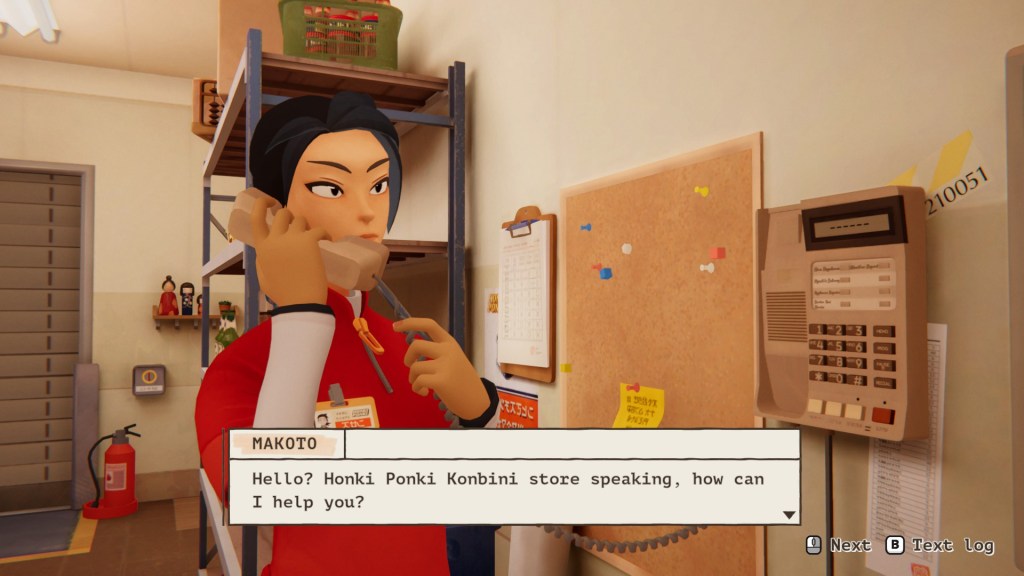
Once you’re done checking out items for each customer, you’ll engage in some friendly conversation about their day to day. This is where inKONBINI’s meat and potatoes lie as you will be the voice of reason for each of these customer’s issues. How would you handle a man down on his luck losing hope in his friendships and his business? What advice can you give a child helping the elderly in hopes of gathering enough money to hit that super duper rare gacha pull to brag to his buddies? What kind of interesting articles can be written by a city slicker posted out in the countryside for her work? Each day you’ll come to meet and greet these folks and they’ll come to learn Makoto and you, the player, as well. I loved the subtle head nods inKONBINI made like when Satoshi pointed out that the Natto, eugh, should be placed lower on the racks for the elderly folk to reach it easier and then compliment you on future days when you heard him out.
Your 7 day work week will have some missteps. There is some really nice voice acting in the first day but slowly dissipates into acknowledgements and small laughter to fill in gaps, not sure if it was mainly to beef up their demo or not but the lack of continuation at the end of the shifts was pretty noticeable. There are some small bugs I ran into, most notably when I finished checking out a customer, the game just black-screened and did not load the next scene. This was fixed with a quick reload so no harm, no foul. While the game will continuously make a point to take these shifts nice and slow, the one speed Makoto has can feel a bit too slow, especially in the later days where your list of stuff to do gets pretty long. This almost feels like a combination of instilling the calmness that is expected from the Konbini but also a forced inclusion to circumvent doing too much in one playthrough. I’m looking at my achievement list and, uh, I got some work to do. I can also see how people will feel this game can be one-directional and, at times, a little boring, but considering inKONBINI loosely resembles a visual novel with extra steps, you should really know what you’re getting into and personally I don’t see this as a problem.
Because when you don the uniform, it’s an opportunity to bask in the moment. You’ll keep track of an area that showcases your commitment to the people who indulge in the products shown and who use the store as a rest stop in their busy lives. A place where you can get a warm cup of noodles and watch the sun rise, reach a milestone and bask in all its glory, or maybe find the stroke of genius needed to put your poetic style in the ears of millions. But more importantly, inKONBINI asks you to take a step back, enjoy the smiles of those around you, and to feel the moment.
These days, I think we all could really use that.

