
Zest is Best
Stop me if you’ve heard this board game pitch before: you’re a farmer in the Mediterranean, and you’re consumed with a burning desire for victory points. You’ll achieve this with a tricky action system that gets you fistfuls of produce, which you’ll then exchange for those sweet sweet VPs. If you’re into modern board games I can all but guarantee you called stop by the end of the first sentence and immediately named a game that does exactly this. Was it as good as Finca, though? Probably not!
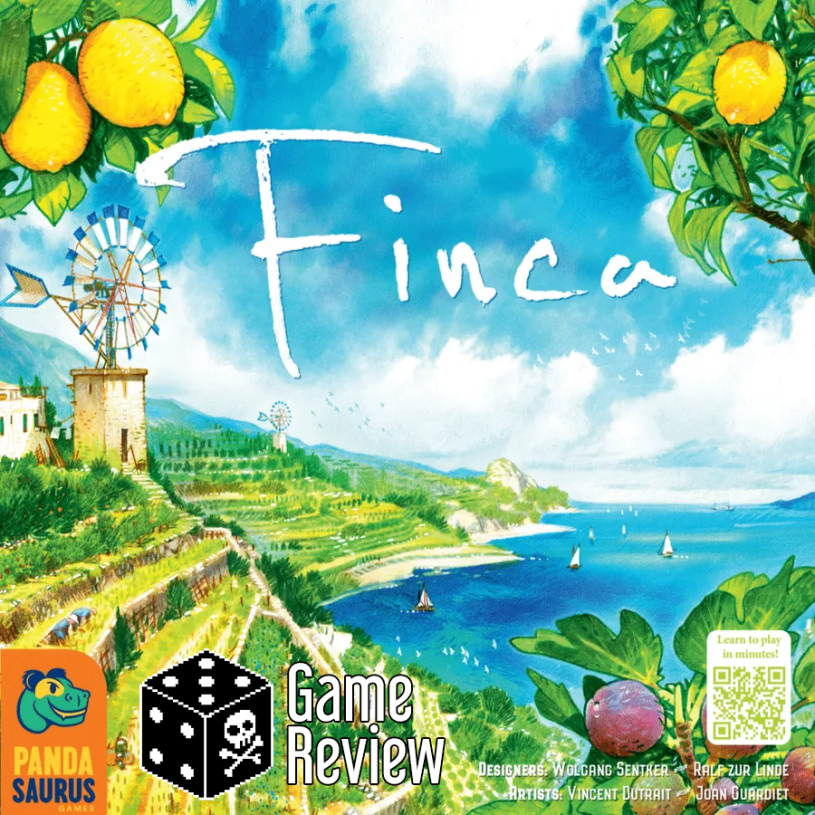
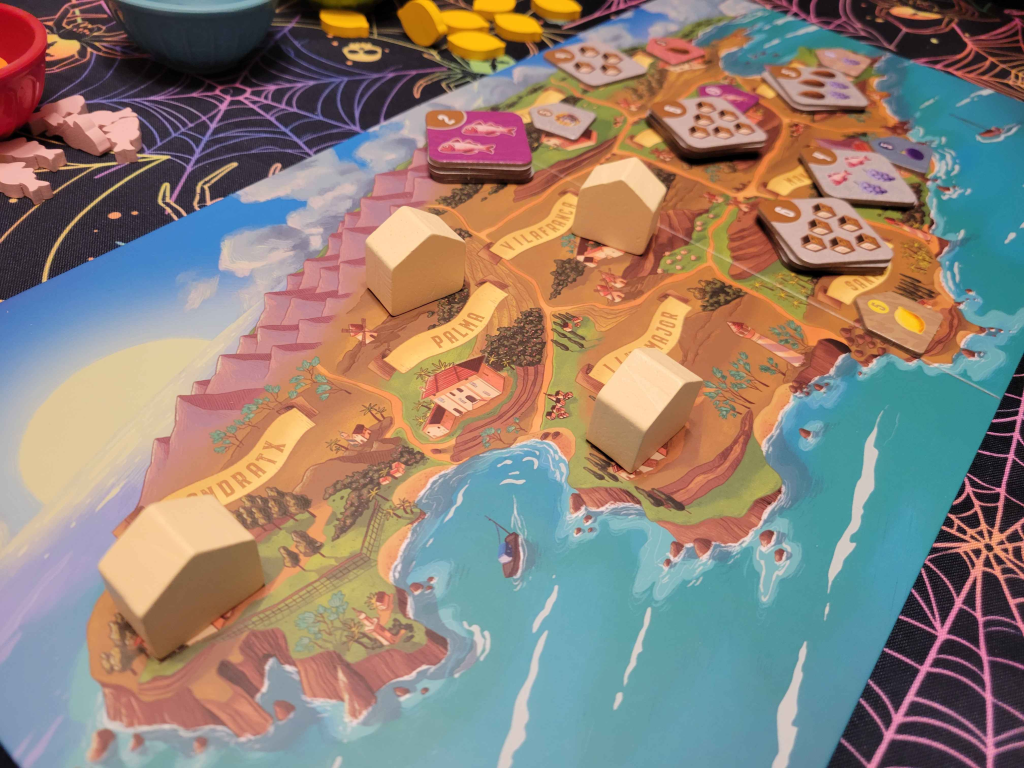
The bits? Colorful, chunky, satisfying for one’s lizard brain. Pandasaurus understood how important this was to get right and made them even heftier in this edition, as well as more colorblind friendly. The board? Pretty, which is no surprise given they got Vincent Dutrait for this version, but never to the point where it distracts from the tiles that you need to read. Everything else is basically irrelevant. You’re here for the mechanics, and they’re as good as they ever were.
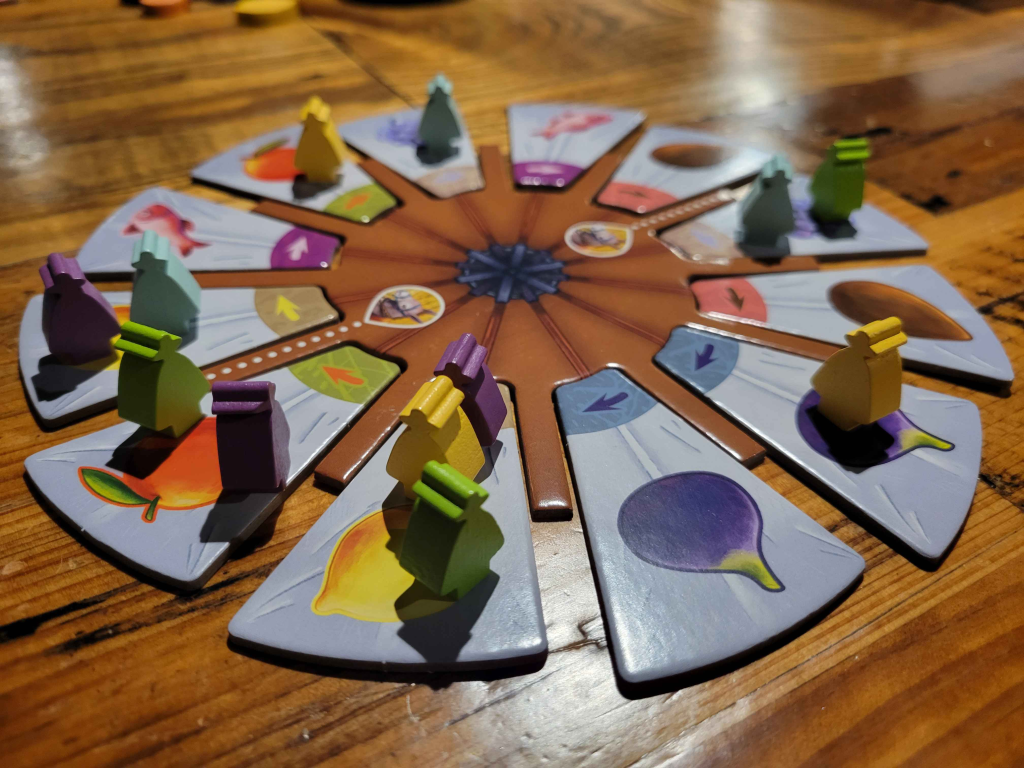
Finca’s claim to fame is its rondel. Your farmer pawns move clockwise around the blades of the windmill, each of which is marked with some sort of good. It works kind of like a multiplayer version of Mancala. How far do they move? As many spaces as there were farmers on their spot. How many fruits do they get at their destination? As many as there are farmers on that spot. Easy peasy oh god there’s lemons everywhere.
This is a major part of why the game feels dramatically different at each player count. At 2p you have a ton of control, with rough turns mostly being a consequence of your own poor planning or a particularly spicy play from your opponent. With 4 players or the newly supported 5p in this edition, you have fewer farmers and need to rely on tactical, opportunistic moves as everyone wildly shifts what’s available. I think I most prefer 3p as it hits the goldilocks zone of strategic and tactical, but I could see any given count being preferred depending on your tastes.
That’s all well and good, but I’ve purposely left out my favorite rule: what happens if there aren’t enough fruits! If the supply is ever overdrawn, everyone returns all of that thing they’re holding to the supply so the active player can take what they’re owed. The constant threat of having your supply yoinked is the game’s main source of tension, complemented with the race to complete the point requirement tiles, always forcing you to consider how much you want to take and whether or not you’re at risk of losing your precious resources before you can spend it.
The thing is, you’re not guaranteed to even have this happen in any given play. Experienced players in particular are unlikely to get blown out by the refund rule, and sometimes it isn’t even advantageous to do so. It’s the constant threat that makes it so damn effective, forcing players to constantly take each other’s moves into account. There’s not a single play in this game that doesn’t affect the greater game state. The interaction-averse may still find enjoyment here as there’s little for direct attacks, but I want to emphasize how impactful any given turn can be, and how impressive that is from a game design perspective. The ruleset is deceptively lean and the setting is standard, but you’d be hard pressed to find a more replayable euro.
In a particularly reprint-heavy era of board gaming, Finca making its return is one that I’m especially glad to see. This is a game that deserves to be perennially in print, not consigned to seasonal status like its citrus. It easily goes toe to toe with all the games it inspired since its original release and I suspect it’s far from finished inspiring more of ‘em.
8/10
Review copy provided by publisher.

