

An Oath Worth Forgetting
The indie scene is rife with choices when it comes to the Roguelite and Roguelike genres. Be it genre staples of 2.5D Metroidvanias like Rogue Legacy and Dead Cells to more outlandish entrees like The Binding of Isaac or Darkest Dungeon, you’ll be hard pressed to go a month without another new one hitting your recommended storefront of choice. So it’s that time of the month, and in front of me stands a Dark Souls-esque Roguelite promising fancy combos, plentiful enemies, and colossal bosses. Alright, let’s see what we got.
The Awakener: Forgotten Oath summons you to the world of Sylvalong, specifically to the land of Lucatia, where disasters spread amongst the area and threaten life in and around it. To keep the land from succumbing to the horrors that plague it the Gods have pulled the world into another dimension known as Nothingness. Said Gods have tasked chosen warriors, deemed the Awakened, to eliminate the demons once and for all to save Sylvalong: no matter how many lives it takes for you to complete your task.

Forgotten Oath’s initial vibe feels like if you took Devil May Cry’s combat, Dark Souls‘ aesthetic, and Rogue Legacy’s rouge-lite systems then slapped it all together in an Unreal Engine For Dummies game-engine. The biggest draw going into the story will be the combat which easily stands as the best part of the game. You’ll have your choice of three Awakeners, each equipped with a specific moveset that caters to different playstyles. I’m a sword-and-board kind of guy so I went with the starting character. Movesets start with a basic combo but can be extended using Launchers, Dashes, and Smashes. These extra moves work as you’d expect, with the Launchers popping enemies up for extra hits, Smashes adding a firm end to any combo, and Dashes which can be done on the ground or in the air as a flashy combo continuation.
While flashy the combos will become notably repetitive, a recurring theme going forward. These movesets can be tinkered with before each run with different styles of attacks, but after trying all of them I very quickly found the bread-and-butter combos and stuck to them. You’ll face enemies in a 30-floor gauntlet, with boss battles on every 10th floor. Each room will only last you about 1-2 minutes depending on the difficulty of the area chosen after beating the previous room. Rooms with harder enemies grant better results which come in a variety of lootable options.
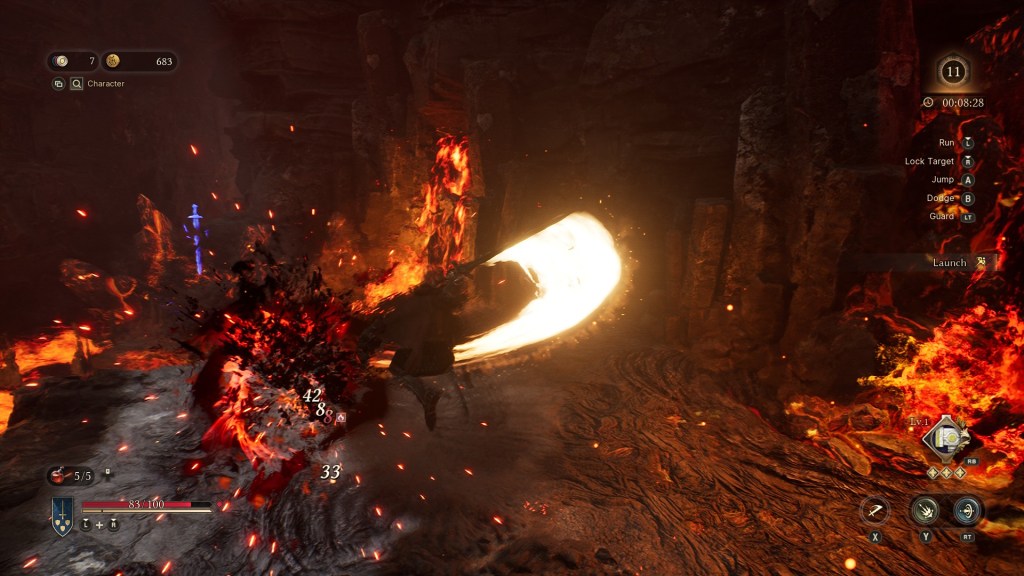
Your main power ups come through Relics, a 7 element card system that helps shape the style of your character during your current run. Each element has a specific ability: fire does damage over time, wind will make enemies easier to crit, ice freezes enemies over time. These cards will be your benefactors towards being an absolute damage monster. You can also grab Void Crystals and Soul Echoes, which grant passive upgrades to your character to take on future runs as well as unlock new moves and characters respectively. Awakeners can collect coins which are good to buy current-run-only items and Relics to help aid in completing the build you want, or to cash out for more crystals and echoes if you want to add more power to your next run.
Relics work in numerous ways: activating by doing a Launch/Smash/Dash, on a passive timer, during a dodge, on Perfect Defense (parrying), and Just Dodges to name a few. Relics of multiple elements can be stacked on the same action so later runs can have you activating multiple elements on one move and doing an abnormal amount of damage through one button press. It gets bonkers keeping up with the amount of damage you can do and a simpleton like me does like doing a big move and seeing the big numbers.

But while the game expects you to run multiple times to gather knowledge of enemy patterns and progress the overarching narrative, the stink of repetitiveness will inevitably work its way into your nostrils. Forgotten Oath’s story arc requires you to traverse through the 30 floors multiple times (I needed 4 complete runs to finish) to collect story-related items, and in doing so shows you just how thin the content really is. The fancy and enjoyable combat soon becomes a min-max study as later floors require you to find the best combo and abuse it to perfection. While hitting an air smash on several enemies triggering several elements to do a waterfall of damage is enjoyable, you’ll be doing it so many times that it becomes second nature and the allure wears out well before the credits roll.
Floors lack diversity and in some cases, explanations (why are there lasers shooting out of every angle in this castle???), and you will see the same room multiple times even though they change aesthetics every 10 floors. I think there are maybe 3-4 variants of each biome that you are asked to run 10 times apiece to power up your character and none of them are very memorable. Since the game does not really provide you with a reason as to why you are in these specific areas, you are just meant to fill in the blanks as to why this asset-friendly arena is where you need to be and these enemies that are given no roots to the plot must be defeated.

The bosses are not much better. Forgotten Oath has three bosses that, again, feel like placeholders within the created biomes but don’t really provide details as to why these enemies are our enemies. The first boss, the Skull Knight, is the only boss given some plot context and that’s given on a few lines of text before and after your fight. The movesets for each boss are pretty limited and easy to counter, leaving these fights long due to higher HP as opposed to inherited difficulty. Once you do get a completed run under your belt returning for another run will only spawn additional higher-rank enemies to make the game more difficult, but this only serves to increase the time spent on each run, which is not doing the game any favors. You can add Curses to your runs to provide a boost in difficulty as well netting you more rewards for each run, but the amount of Void Crystals and Soul Echoes are collected at such a respectable level already that these Curse runs feel provided for personal enjoyment rather than progression necessity.
Lastly, the localization team for Forgotten Oath could’ve used some more time polishing their work as there are multiple typos and grammatical errors strewn throughout the title. Font choice looks like a preset default was used and doesn’t mesh well with the aesthetic of the game, giving the UI a very rushed looking finish and causing some confusion when explaining Relics and navigating around the menus. Using the term “Usually” and “Seemingly” when defining a card that does damage on a certain move is a very odd choice that makes me wonder if some of these cards were really working as intended if the text isn’t even quite sure of its intended powers.
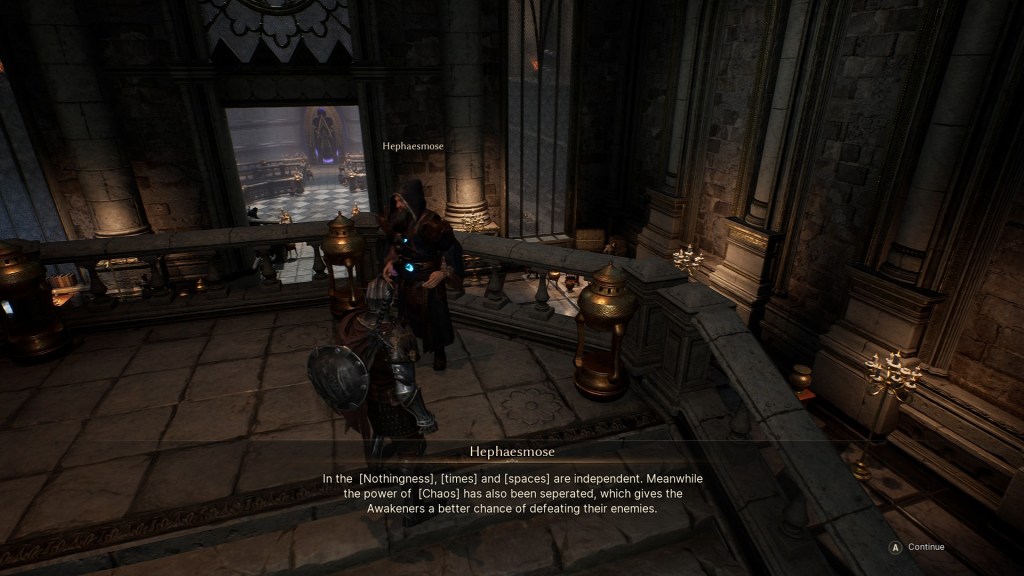
What sullens the mood the most with Forgotten Oath is that it does not feel like there is a full game presented to its audience. The combat system feels fleshed out to the point of functioning and then everything else is rushed around it to mirror the allure of a complete experience. The plot is non-existent, the locales are paint-by-numbers, and the enemy selections are cardboard to stop you from speedrunning the game by accident. As much as the combat tries to mask the incompleteness of its surroundings, there’s very few redeeming qualities and even less to grip you to seeing The Awakener: Forgotten Oath to its end.
 Reviews as Fair as a Die Roll