

During the PS2 era, which we can begrudgingly now call a “retro age,” the tag team of Omega Force and Koei was almost an unstoppable force. Dynasty Warriors, releasing franchise titles 2 through 5, sold around 5 million copies during this console era. A pioneer in hack-n-slash gameplay, herculean strength versus insurmountable numbers, and a surprisingly in-depth history lesson (loosely based off a game loosely based off a book loosely based on real life territory wars). If you’ve been around games, you’ve seen or heard of Dynasty Warriors. Today we’ll go over a personal favorite of the series, and one that provided the blueprint to the continued success of the Warriors Franchise going into the 2010s: Dynasty Warriors 3.
Before we get into the 3rd title, the history of the previous two titles and their contemporaries play a big part in the foundations. Turn the clock back to 1985, where the first video-game representation of the Three Kingdoms set stage on the NES and DOS, among others. Romance of the Three Kingdoms brought a turn-based tactical RPG setting to the romanticized text of the same name, bringing the historical names and battles to your fingertips on your quest to unify warring China. Five sequels later and RotTK: VI: Awakening of the Dragon, releasing in 1996, prompted the company to recognize its growth potential with the IP and began to branch into other genres and territories.
The original Dynasty Warriors is not talked about often. The second spinoff series (coming out in 1997, a year after Sangokushi Koumeiden) took a drastic turn in genre by ditching the turn-based strategy format and introduced…2D fighting? Dynasty Warriors in its inception looked more like Samurai Shodown and Soul Edge than the current series’ originator, boasting a 1v1 fighter with an emphasis on parrying and engaging weapon combat. Despite the change in scenery for Koei and developer Omega Force (who have, for 27 years, had a hand in every Dynasty Warriors and DW-spinoff title), the 2D fighter was critically praised, giving the green light to continue the spinoff. But with the upgraded specs of the new generation, the PS2 was provided with a sequel that again turned the tides on the Dynasty Warriors franchise.
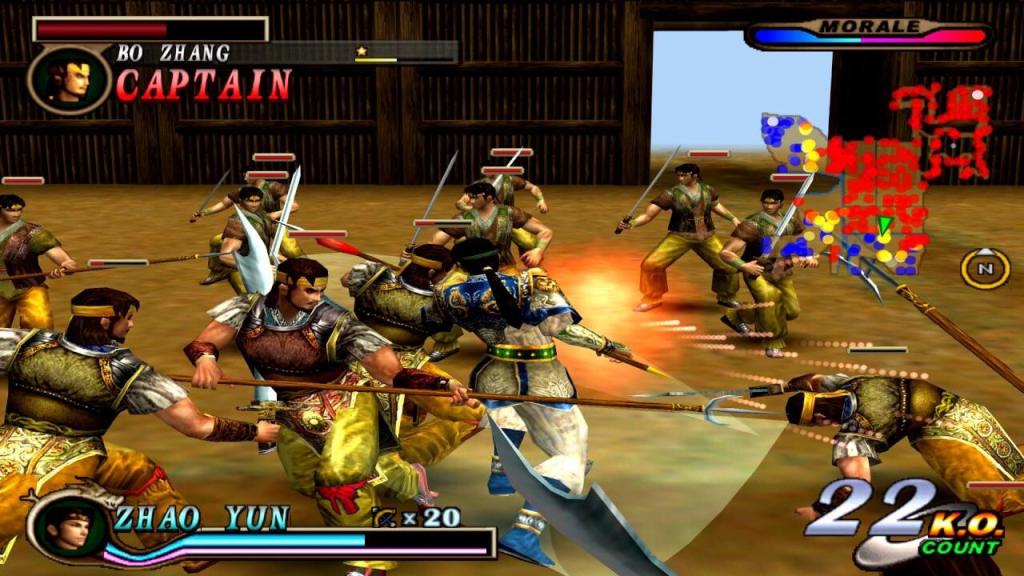
The sequel to Dynasty Warriors technically isn’t a sequel at all. In Japan the title reads as Shin Sangokumusō, changed from the original title Sangokumusou. But overseas, the title was dubbed a “sequel” and was given the Dynasty Warriors 2 moniker, despite the game hardly resembling anything from the first. Releasing 4 months into Japan’s PS2 era but releasing as a launch title for the console overseas, Dynasty Warriors 2 took the 2D fighters and enveloped a brand new 3D world of hack n’ slash beat-em-up “1 vs. 1000” style battles.
Players would take their character of choice and relive major battles within the timeline of the major powerhouses in the war: Wei, Wu, and Shu (and 5 characters that did not fly under those banners). Characters fight in battles with light objectives, kill said Commander before the enemies kill your Commander, with real-time events strewn throughout to sway the battle in either side’s favor. It’s a style of game seen relative to Fighting Force, but the inclusion of so much around the fighting made Dynasty Warriors 2 something of its own. The limitations of working with a brand new console kept the amount of content light, but the bones of the game showed true force going into its inevitable sequels, plus, 300,000 copies sold in Japan over the first two months isn’t a bad sign.
So what drives Dynasty Warriors 3 into such highly-regarded territory? The amount of inclusions and upgrades to a solid system in only 13 months of time between titles. Take all the characters from DW2 and add 13 more to the fray, including characters from the Nanman Tribe. Nearly double the amount of stages. Overhaul the graphics engine to expand the stages and events, and add weapons, items, and expanded combos to the mix. There’s a lot to go over!

The character list expanded yet again in DW3, with 13 more characters being added: 2 for Shu, 3 for Wei, 4 for Wu, and 4 for Other. Each character plays an important role throughout the timeline of the Three Kingdoms as Musou Modes, basically your Campaign or Story mode, are available for each character. Some stages are character-specific where some characters were not in a particular battle so the game avoids (when possible) just “adding” characters into battles they weren’t in, a definite upgrade to the 8 missions available in DW2. The later expansion, DW3: Xtreme Legends, added Musou Modes for the Other faction characters, but the original still allowed you to play Free Mode missions with them.
Each of the 23 stages, smaller missions given 30 minutes to complete and the bigger ones given 90 minutes, has been vastly upgraded in size and busy-ness. Stages feel almost necessary to travel by horseback as several battles happening at once gives the strategic need to weigh joining one battle over another. Littered throughout the stages are boxes and pots that can provide timed attack/defense bonuses, newly added Weapons and Items, or permanent increases to your HP and Musou bars. The new engine, while inconsistent with total on screen body count and limited field of view, provides much more detail in a smoother playing fighting system that only experiences some slowdown in the most hectic on screen scenarios. Impressive for a PS2 title that was doing work in a genre largely untouched.
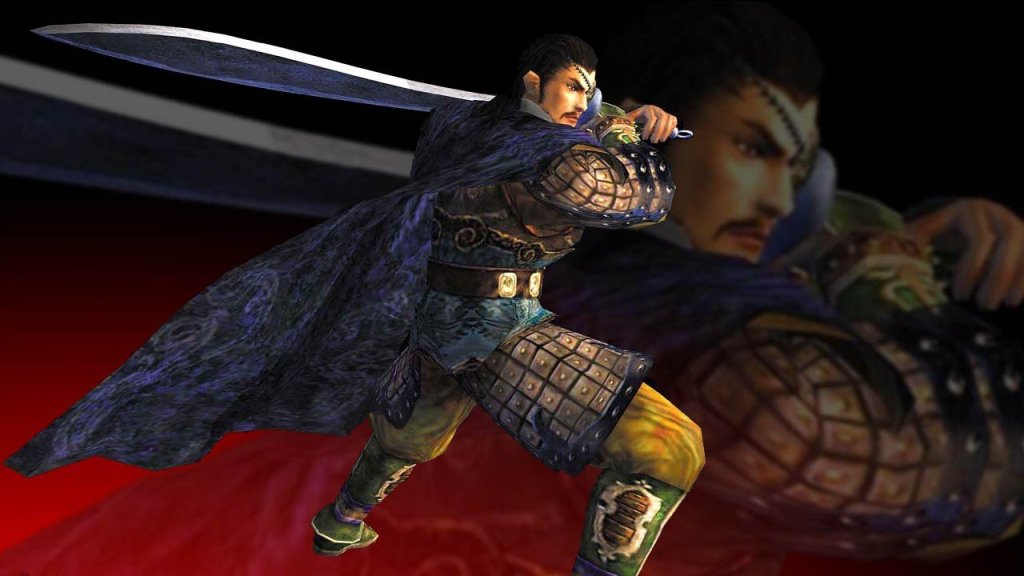
The biggest upgrade comes with the customization of each character. DW3 expands on this by adding acquirable items and weapons for team and individual respectively. Items are passive upgrades that are found within specific boxes strewn about levels or awarded for defeating officers. These give passive boosts to everything from attack, bow defense, jump, speed, HP, essentially anything that can gain a stat boost. Hidden rare “Red” items are found through completing secret objectives, which are announced with a specific text prompt when completed, that are absolute bonkers additions like doubling your timed attack/defense/musou boosts or acquiring Lu Bu’s Red Hare at the start of each battle. Items are upgraded through finding better copies of their original, with higher difficulties providing higher stat boosts, so it’s worth taking your character through a few Hard difficulty runs to help newer characters. With 5 items equippable per stage, it’s a great way to build out what you specifically need for your warrior to pack that extra, necessary on harder difficulties, punch.
Weapons are acquired the same as Items but the gauge on necessity is twofold. Each character has 4 stages of weapons, the weakest two are shared amongst warriors with the same style: Spear, Sword, Halberd, Pike, etc., and the strongest two remain character-specific. Each rank of weapon provides passive boosts much like the Items that will be found through copies, keeping the better of the two dependent on how you like which stats. The increase in rank also provides you an extra attack on your normal chain, 4 hits on Level 1 and increasing to 6 hits on rank 3-4, and an extra charge attack on the increased number. Rank 4 weapons are the cream of the crop for each character but require completing a specific objective on a specific stage on Hard to collect. Not an easy task to do, but absolutely worth the trouble to make your warrior ridiculously powerful (and good luck on those Rank 5 weapons on Very Hard in Xtreme Legends).
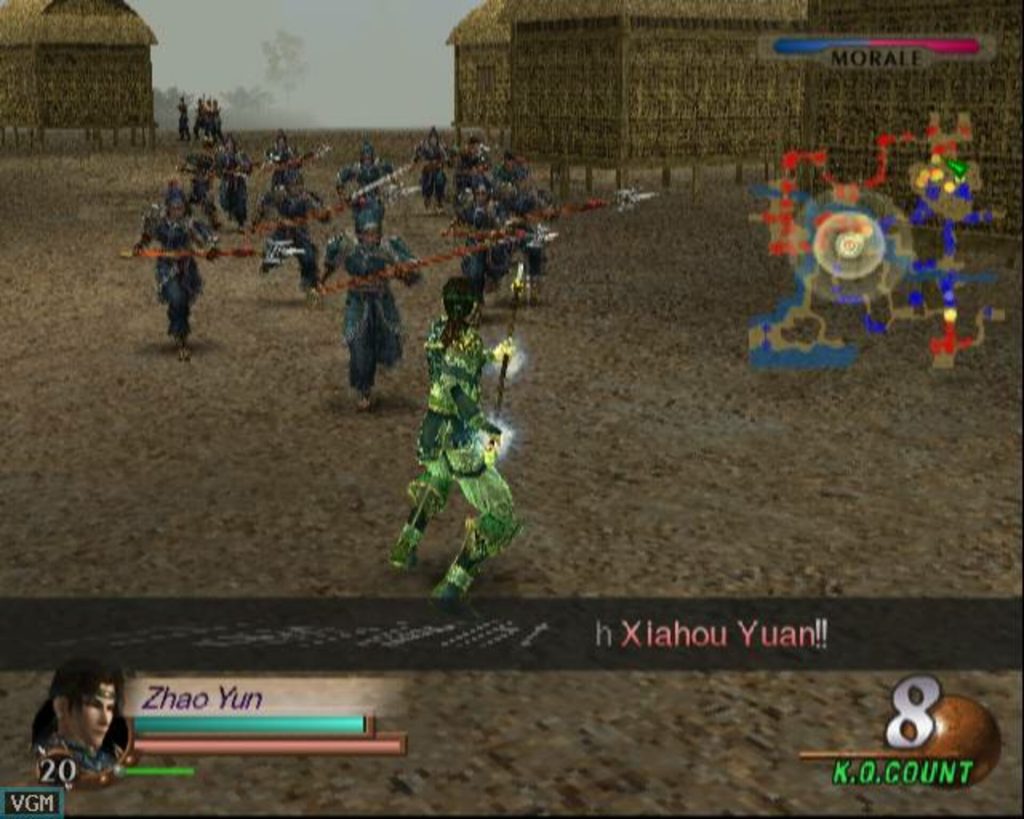
DW3 also introduced multiplayer for the first time within the hack n’ slash part of the franchise. Playing split-screen had its issue with body count being a push on the PS2 hardware, but having a buddy hit the Double Musou with the Lightning buff that is only available with a friend was that “dap your buddy up while also flexing your big-ass muscles” feeling every time. You couldn’t say no to tag-team combos and running through stages together and not have a blast.
But we couldn’t wrap up a Dynasty Warriors without talking about its soundtrack, because, dude. Nothing screams DW like the rock and metal instrumentals blazing through each stage, the solemn downplayed and pitched ambience soundtracks in between attacks, and the absolute bangers that are tied to the later stages. Have you heard (the soundtrack to the Battle at Wu Zhang Plains)? My God you can’t be more in the zone when that guitar solo invades as you’re fighting for your life in one of the hardest stages of the game. (Lu Bu’s track) is etched into my brain knowing when I heard that, it meant time to leave because you’re gonna die.

I know a lot of people feel strongly that Dynasty Warriors 4 is the peak of the franchise. Adding the Edit Mode, revamping the weapon system to be grinded out on levels instead of random chance, and providing a more central and structured Musou Mode for easier character unlocking. But Dynasty Warriors 3 laid out a structural foundation for a genre not yet seen in the gaming world that to this day will still consume hours of your gaming life. Going back and playing through a few campaigns to get the feel of the game again turned into playing 1-2 stages for old time’s sake to completing 3 Musou campaigns and enveloping an entire Saturday slamming combos and defeating officers. The point of Dynasty Warriors’ explosion onto the gaming world starts here, and for devout fans like myself (hoping for DW10 info this year! Please!), it’s always worth coming back around to see an old friend for a battle or two.
 Reviews as Fair as a Die Roll