

C’s Get Degrees
High school can be a rough time. A 4 year experiment on learning what you like, what you’re good at, and failing at the things you need to fail at. Some can do school well and guide the foggy waters of the educational system, but for others it’s a hard road with bumps along the way that test who you are and what you think you are. This is a statement and understanding that developer KO_OP has learned good and well with their newest title, Goodbye Volcano High.
It’s been a rough few years of development for the team. Facing a full narrative reworking after having to hire a brand new writing team, undergoing the challenges of navigating the COVID-19 pandemic, and swallowing their pride and avoiding crunch with delays of almost 2 years, the road to bring Goodbye Volcano High has been dreadful: not to mention the unacceptable but ultimately unavoidable internet outrage involving games with LGBTQIA+ characters at the helm. So after all this, we finally were able to witness Fang and company navigate their last year of high school with one small caveat: the threat of worldly annihilation via meteor..erm, asteroid. Sorry, we all get that mixed up.

Billed as a “cinematic experience,” Goodbye Volcano High is a branching path but overall kinetic visual novel involving senior student and non-binary lead singer/guitarist for Worm Drama, Fang. Fang has been prepping for this year’s Battle of the Bands with bandmates and best friends Trish and Reed, as well as dealing with the expectations of career-pathing and life-choices expected of people who just got allowed into Rated-R movies. Volcano High’s 8 episodes tell the journey of the beginning of Senior Year, to the live reaction of breaking news involving the asteroid, to Fang making amends to end their year, and potentially their life, on the right note.
The main benefactor of positives will start with the first chord you hear. The soundtrack shines brightly with artists Dabu & Brigitte Nagger composing an EP’s worth of indie rock tracks that beautifully encapsulate the fleeting emotions of their lead singer and the sentimental values of their personal life and band life held on by a single thread. While the gameplay for the score are simple rhythmic pieces to let the audience engage a bit with timed guitar plucks and snare drum hits within the song, the music carries so well and is by and far the standout portion of Volcano High. For complete transparency, I’m listening to it as I write this. (Don’t Call and Reunion are absolute bangers.) The art direction shines just as brightly, boasting a piquant pastel palette with starry night skies, beautifully spacious and inviting outdoor backdrops, and colorful imaginative characters. Each character is brimming with emotion and individuality and the game as a whole is such a treat to gaze upon.

Volcano High’s voice acting and script really lean into the “high school cringe” aspect and I mean this in the most positive way I can. The multiple layers of anxiety, apprehensiveness, and pseudo-confidence cover the characters like a winter blanket and exude the snarky and snappy nature their emotions would be handled during the most tumultuous points of their lives. Feelings will be hurt, kindled, and reconciled as fast as they are put into place, but who didn’t have emotional breakdowns with friends every once in a while, especially in predicaments such as Fang’s?
The audio direction of this script and audio miscues though brings the volume down a few notches. Lines feel as if they were recorded in bunches and cut for each sentence to let the game space out and ingest each line accordingly, which is no big deal. The problem with this is when lines get post-editing done to them, like adding echo from a microphone or any after-effect on the audio, there are prominent and noticeable cuts where the audio stops to let the game require a button press to continue. It’s super jarring hearing this and makes these scenes feel rushed and disjointed knowing a simple extra half-second of audio to fade out the extra pieces would’ve made these moments sound much better. I also ran into a few instances where the Autoplay feature would misfire at random causing a full line to be skipped immediately or would cut off voice lines prematurely. Since there is no Log feature to access previous lines that I could find, I have no idea what was said during these moments.
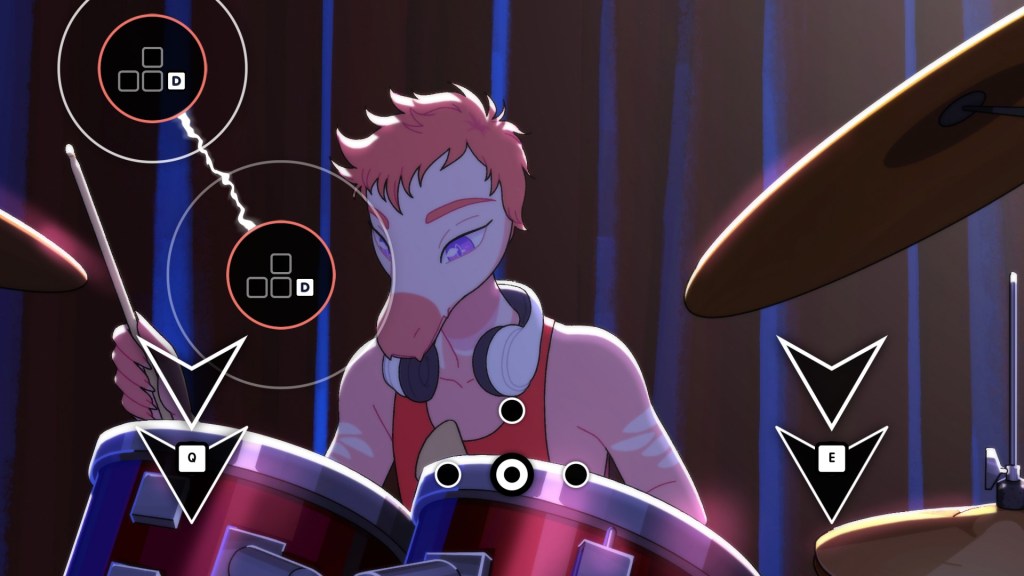
The animation felt uneven at times as well. The musical scores boast buttery smooth animation to really heighten these impactful moments where Fang’s heart and soul are pouring into every nook and cranny of each scene. But the in-between moments of day-to-day routines feel disjointed and mislaid. Animations for walking scenes feel Flash-era in how clunky and stiff the animations are presented. Mouth movements don’t have enough frames to cover the lines being said. Scenes have a tendency to “pop” in place where character positions don’t connect with the end of one line and the beginning of the next one. And most cutscenes suffer from a lack of In-Betweening which make characters look a bit disjointed in their movements.
And, look. I understand going through a full narrative rework is bound to cause issues especially when under the time constraints that video game development provides, but some issues are too much to ignore. The amount of L&L (Legends & Lore, GVH’s version of Dungeons & Dragons) sessions in the game feels like artificial inflation of the game’s playtime. While there are some beneficial moments for the group play sessions, these take up nearly a third of the game which could have been used to hash out other scenes and plot points or provide more world building within Volcano High and its students. This move, combined with the omission of most voice lines outside of the DM of the game, makes a rushed game feel even more rushed and nets more negatives to its inclusion than positives.

Another is a scene about halfway through the game, and I’ll try not to spoil too many details. But within the day-to-day sections of going through school, Fang is texted by a secret admirer from an unknown number. I loved these as it really nails the grounded feeling of pouring emotions within the anonymity of a text conversation. The feeling of unequivocal mutual intimacy, being able to rationalize the confidence of a confession without removing the mask of uncertainty is done so well here, and were many of the highlights of my playthrough.
But the scenes are pieced together with the intention of figuring out who the secret admirer is, and the fun is playing the whodunit up until the moment the two meet. But for reasons angrily unknown, they up and spoil the whole thing a chapter before it happens. I had tried to mock it up as a potential bait-and-switch to get me later in the game, but they proved my theory wrong and flat out confirmed their own killing of their suspense not 30 minutes after the suspected cutscene. It felt disloyal to the building of tension it slowly seeped in and left a horrid taste in my mouth when the truth was revealed, instead of whatever emotion they were hoping for.

And it’s pieces like the above that really showed how in dire straits Goodbye Volcano High was. The uphill battle KO_OP had to push through after numerous delays left the game in a scrambled state. This kills me because as a fan of this game, there’s so many things I adore about Goodbye Volcano High: the characters, the music, and the instilled love of their creation is shown in so many ways that I feel visual novel fans should absolutely play this game. But as a reviewer I cannot look over the distinct lack of polish in several aspects and the despondent writing direction with its own plot setups and finishes. Goodbye Volcano High, under less tumultuous circumstances, had the makings to create a genre-defining experience that would carry the narrative weight to captivate audiences much past its expectations; but this title, much like some of its main characters, just needed more time to show who they really are and what they can really be.
 Reviews as Fair as a Die Roll