
The monumental task of creating a video game is something few people fully comprehend. From sprawling AAA studios to the valiant do-it-all-ers that feel destined to put their dream into code, there are very few situations where such time and effort can be presented to the world as video games are. I’ve been through this gauntlet before; it took me 3 years to piece together my own video game and the timeline, stress, and elation of going from launch to land is a very prominent memory. So when I see grand undertakings within the video game world, crisp animation, hand-drawn art, and an attention to detail that’s so eye-poppingly specific that you’d be crazy not to acknowledge it, The Many Pieces of Mr. Coo looks like something you should know about.
Presented with a style and heart reminiscent of Saturday morning cartoons, Mr. Coo relishes the glory days of the point-and-click adventures of the 1990s while boasting impressively well done hand-drawn art and animations. I got the chance to play through it over the past couple days and I genuinely enjoyed what I saw, but the game lacked severely from a technical standpoint. I had had an issue with some of the “post-game” unlockables being unable to be viewed, so naturally I went to their Discussions forum on Steam to see if anyone had had the same issue as myself. Instead of finding an answer to my question I found a tug-of-war between author/animator Nacho Rodriguez and contracted developers Gammera Nest regarding hard timelines, undelivered expectations, and an unfinished game that both parties were banking on to be a critical success.
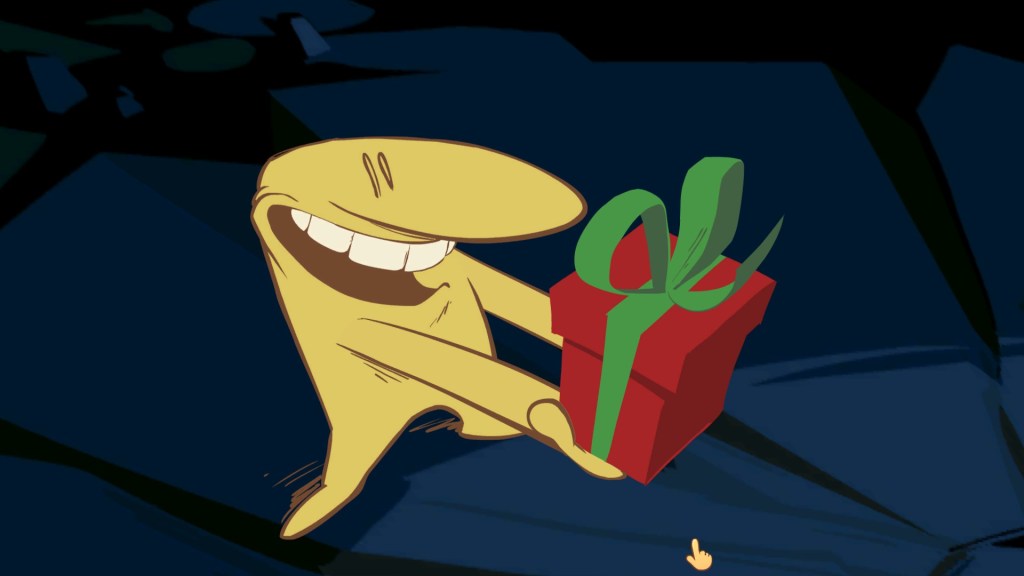
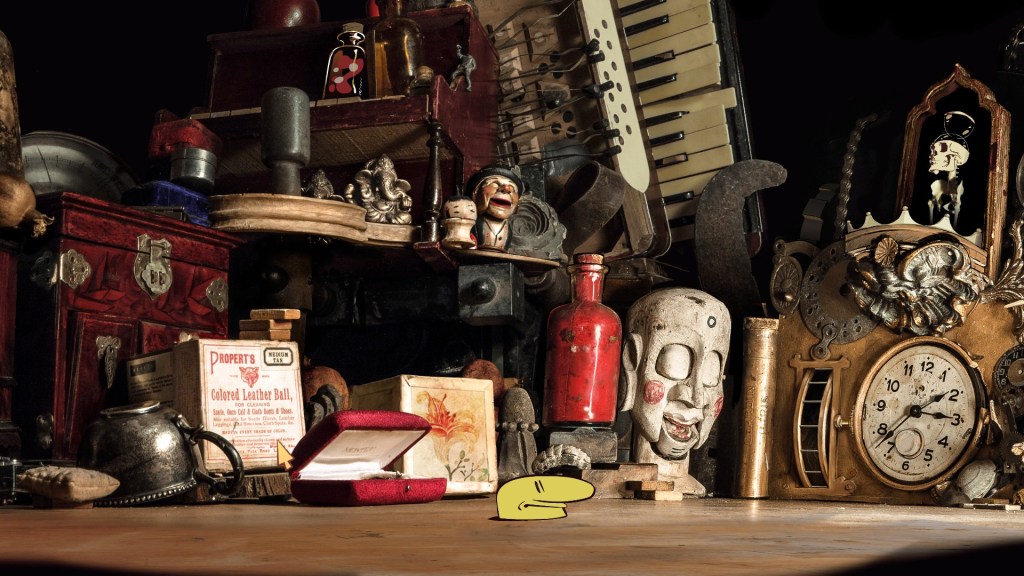
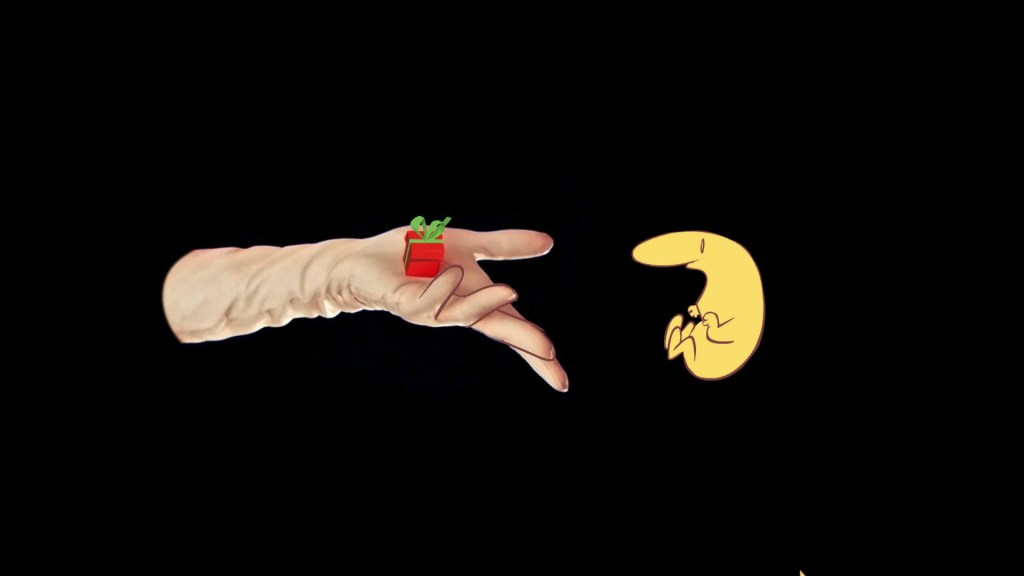
Let’s start with the game itself. Mr. Coo runs about 2 hours on a first go, rather short even when compared to most Point and Click games requiring a keen eye and a want to click everything as guidance for its few puzzles. The art and animation is absolutely breathtaking, showcasing some wacky looking characters in a hodge-podged world meshing styles of cartoon, realism, portrait, and real-life videography. The portrayal of everything happening is an alluring landscape to transport yourself through, even if everything on screen may not really make any sense to you, but it is quite the marvel to look at.
Mr. Coo runs at a standard point-and-click adventure pace: click on interactables, watch what they do, and piece together the correct sequence to make the things do what they need to do. You can feel the love and care for each movement as each interactable has bespoke animations, but the cracks in the foundation start to show the more you tinker around with the end product. Screens become unavailable and require soft-resets, optional content is unavailable to access once unlocked, and the overall package ends abruptly. It’s enough to where I was ready to dock points and express very valid frustrations. But I wasn’t the only one.
On September 12th, author and animator, Nacho Rodriguez, put out a scathing statement on X, formerly known as Twitter, regarding the handling of his passion project from developer Gammera Nest, with the allegation that the game was released without his blessing in an unfinished state.
Nacho Rodriguez has been working on Mr. Coo since 2012, stated in his statement above, and partnered with Gammera Nest in 2018 to help develop the game into a full-fledged title. In Nacho’s post, he states that the art and animation were finished in 2020 and the following two years were spent on getting the game ready on the developmental side, but this was not done, and that he thus asked for a postponement or outright cancellation of the game. During this timeframe, Nacho alleges that Gammera Nest, “…began to cut me out of the decision-making process, while continuing to promise that they would deliver on their end.” Nacho continued that on September 7th, “…the video game was released without my approval.”
Mr. Coo has received glowing reviews for the art and animation but has received lower overall scores due to technical issues. Nacho blames Gammera for this stating, “…the game that has been released is not faithful to the instructions given, nor is it the experience that was designed for the player.” With the cherry on top as Nacho fires, “Perhaps they will decide to do the right thing and honour the commitment they made when they started the project to port my work. Or perhaps, on the contrary, they’ll do the bare minimum and deprive players of a complete and quality experience.”

Fans of the game were quick to respond to Nacho’s claims, firing off responses that ranged from passive-aggressive to aggressive-aggressive at Gammera wherever they felt they could be heard, whether on X/Twitter posts or Patch Note reports on Steam. I can imagine how it must feel for a company to mishandle your passion project over a decade in the making, and potentially severing you from the decision-making progress on your own project. I can also imagine what talks went through to get to this scenario. But I can also imagine what was agreed to within the contracts of the two parties and how this all pans out with such a scathing dress-down of this whole ordeal. And I wasn’t the only one.
On September 13th, Gammera Nest responded to Nacho Rodriguez’s claims and accusations in their own response on X/Twitter. In a translated statement, Gammera states that they had “[provided] him with programmers that we hired to work exclusively under his direction,” as well as other additions to the needs of the game so long as Nacho “respect the signed contract which indicated that he could not delay the launch date once agreed.” When the game was clearly showing signs that it was not going to be finished on time, the four-year contract had to be met to “avoid any type of penalty for which we would all be responsible.”
The Many Pieces of Mr. Coo released on September 6th and Gammera Nest have patched the game 6 times over the course of two weeks, where alleged issues found by Nacho have been fixed. It currently holds a 90% “Very Positive” rating over 276 reviews on Steam. Gammera Nest cited this reception stating, “the game has received very good reviews, the public support is enormous and, although it still had some bugs at launch, our team has resolved them in real time, listening to the community.” Gammera Nest closed with, “…we try to help [young studios] who want to enter [game development] in the best way possible. In this case…it is clear that the result of the work of the entire great team that is and has been part of Gammera Nest of which we are proud, has been remarkable.”
For Nacho Rodriguez, Mr. Coo has been a passion project for over a decade and a dream of his to bring his artistic mastery to the gaming community. For Gammera, Mr. Coo was a match made in Heaven for the developer/publisher to strike video game gold for a small team with high aspirations. When a passion project nears its completion and is not everything you want it to be, of course you want to pull the plug until everything is pitch perfect. But if the video game world is but one thing it’s expensive, and no company will provide four years of time, effort, finance, and manpower to receive nothing in return, especially for any publishing studio aiming to represent any number of As.
When you look at the whole of its tumultuous circumstances, it can soil a game that on first blush appeared to be nothing short of magic, but every project runs on three objectives: Cost, Time, and Scope. If two cannot budge, The Time of the contracted deadline, and the Cost of development, the Scope must change to fit the project’s demands When this happens the high risk of swinging for the fences may only provide a dribbling ground-ball, but that ground-ball will provide funding for developers to continue making the game the best it could be. In the case of Mr. Coo it will provide an avenue for fans and interested gamers alike to see a bustling spirit of animation and surrealism that may otherwise never have seen the light of day. And it will show the world that an idea, even when mishandled, can provide something special for someone out there, and can ignite a spirit to potentially reach for their own stars in the future.
But like any show piece, it must keep its secrets behind the curtain, lest it tarnish the beauty of the hard work brought upon the stage. A lesson learned in real time for both author and developer.
 Reviews as Fair as a Die Roll