
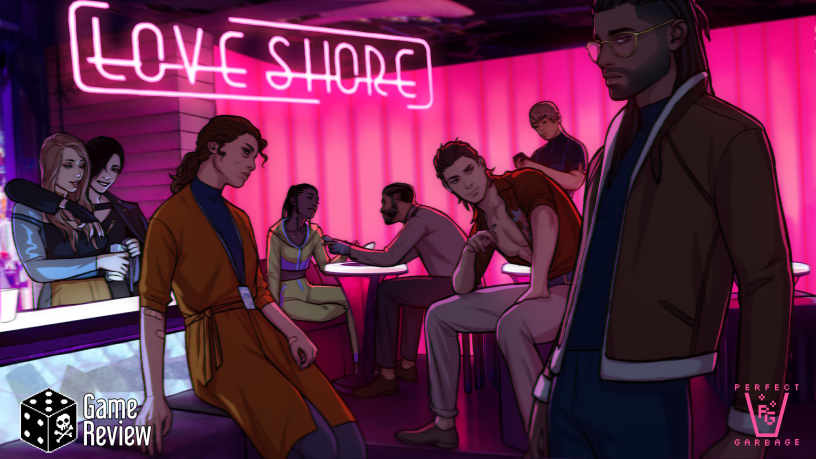
Neon-Soaked Future
Cyberpunk and the ever-interesting future of technology will forever be a fruitful breeding ground for stories and the video games that portray them. The endless possibilities of evolving technologies can and will spill into the various aspects of life: entertainment, medical, political, all have the hands to reach out and push and pull where your daily routines will go. With all that power comes the rise of the few and the teetering toll of the many, in a sprawling city which cannot sleep because it cannot afford to. Welcome to Love Shore.
After spending years in prison, a futuristic tomb of purgatory-like paralysis where the mind is awake but the body remains frozen, you take control of one of two recently released inmates, Sam or Farah. Both are S.Humans, cybernetic bodies with consciousnesses made from DNA of the buyers that can be upgraded for a steep price, two of 100 still accounted for within the city limits. Each character is reacclimating to the outside world of a city made to keep people in, struggling to make ends meet while trying to avoid the people that got them in prison in the first place. Will you succumb to the City and the Gods that make sure the cogs continue to churn the wheels of fate, or do you break free of the chains that bind you, escape the city, and the impending war that seeks to doom thousands?
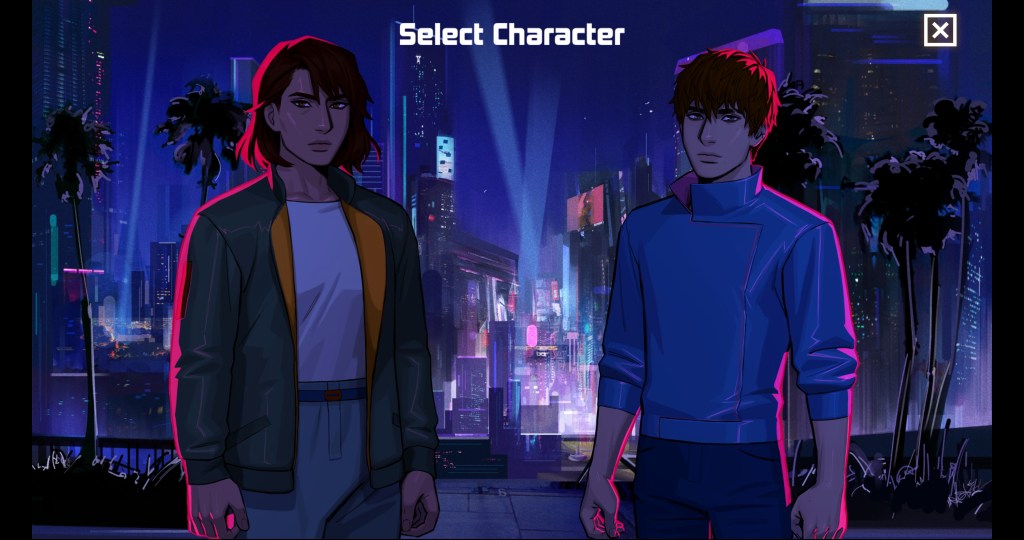
Love Shore is a multi-ending visual novel, with Sam and Farah each having 4 main branches to their stories. Gameplay is what you’d expect from a Visual Novel with the exception of a few flavor pieces to add to the palette: your smartphone, which tracks text messages and your passive stats given by select dialogue choices, and your scanner built directing into your eyes, giving additional information on people you interact with around the city. The scanner is a neat idea, giving little tidbits of info like age (some people are a lot older than they look), hair and eye color, and status. The issue is that it seems baked in but not enough time in the oven, as I kept expecting info to change and potentially give information to eagle-eyed players, but it was used as a one off piece and I didn’t see much value in subsequent play-throughs.
Your phone will house short text messages from main and secondary characters that provide small insights on their happenings throughout playthroughs and also show some happenings off-screen. Also installed is the S.Health App, which shows three passive stats: Strength, Courage, and Intelligence. These are increased with specific dialogue choices that can unlock stat-specific dialogue later in the current run. If you don’t have the correct stats for the dialogue at the time, you can’t say it. While I like this little RPG-like addition to the VN formula, it could really use some quality of life improvements. Letting us know which dialogue options will increase what stat would be vital to help run wanted routes and having a counter of how much of a stat is needed on the dialogue’s option would make going for a specific route much less stressful. With how it’s currently set up, it’s hard to predict what is needed and can stunt routes of interesting knowledge.
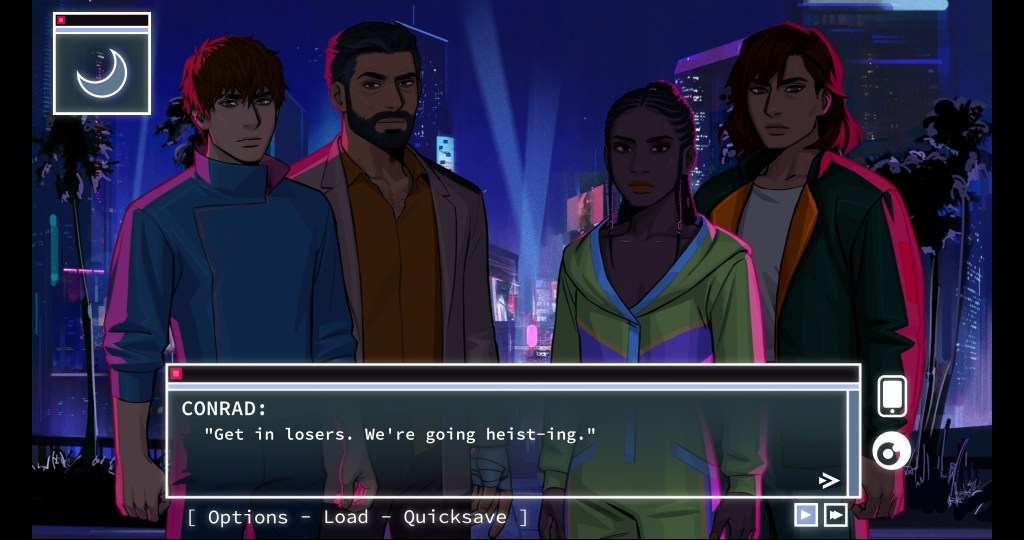
With over 25 endings across 8 potential paths, Love Shore provides a lot of road to cover for those wanting the full story. Each route will range from around 90 minutes to 2 ½ hours, which will split VN purists. Personally though? I love the route sizes. The shorter routes give more incentive to try different routes without feeling like you hit the wrong flag and have to redo a 10-20 hour route. And with the amount of endings available, you can use the tried and true Skip Dialogue function to shorten some routes to near 20 minutes (or just slap in some quality save spots, your call).
That said, most routes tend to wrap quickly and feel rushed to their finish. Love Shore’s initial plot points revolve around a 3-5 day/night cycle, so a lot tends to happen in a short amount of time. Potential strangers get proper horny in less than a work week, Gods who are hyped up to be of colossal power are killed off in three sentences, and (for the sake of potentially spoiling other routes) instances where characters would speak to each other are expressed, made aware of, and then are forgotten just as quickly. It’s more of a, “Hey, you might see this again,” but plays off as stunted development timelines and cutting room casualties.
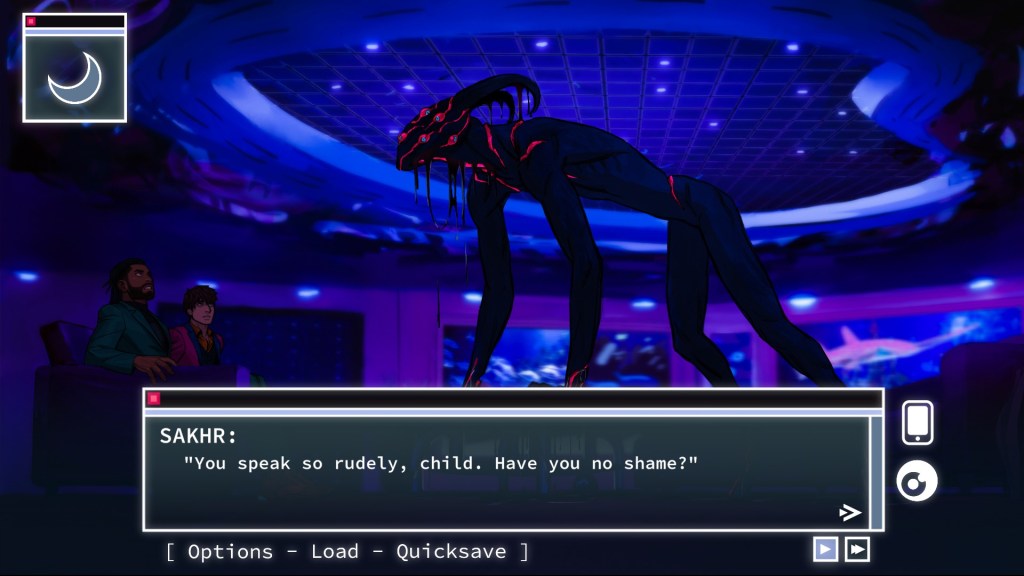
But what is there is fantastic. I love the aesthetic and concepts that build Love Shore up to a larger-than-life destination. The city runs a 24 hour cycle where shops morph into completely different businesses after the sun goes down, most notably a large aquarium by day turns into a Super High Roller casino at night, run by a God no-less. The characters are all interesting puzzle pieces to Sam and Farah’s past, the ways the city can change as a consequence of the actions taken are vast, and while things are wrapped up quickly, they’re still wrapped nicely.
Despite a long and Kickstarter-funded development time, people may look at the flaws as too many to recommend what Love Shore provides. But I very much enjoyed my time and have had a blast taking the shorter routes to just enjoy a quick chunk of lore and learning more of the stories that hide in the alleyways of the bustling city. I feel a couple changes would really put this in a higher spot in this year’s catalog for Visual Novels, but if you can gloss over a few issues, and save regularly, you’re looking at a winner this year.
 Reviews as Fair as a Die Roll